
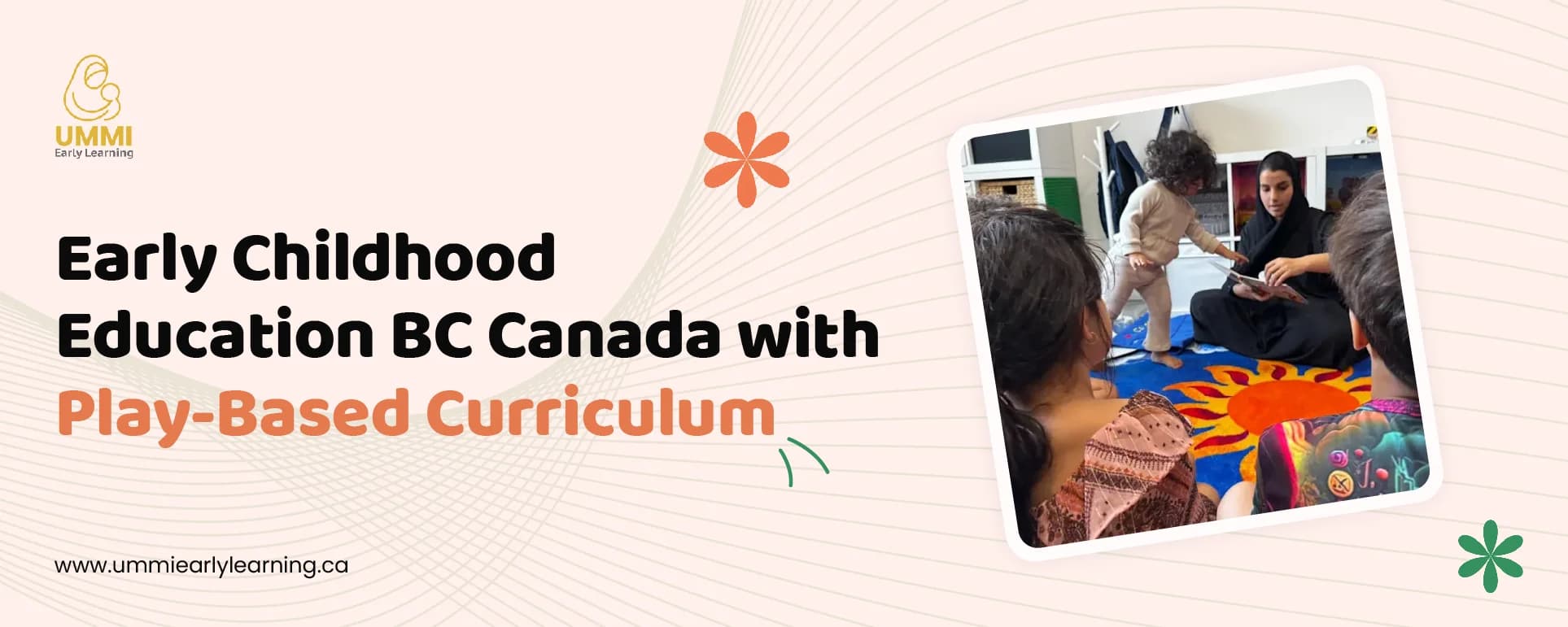
UMMI Early Learning: Early Childhood Education BC Canada with Play-Based Curriculum
Early learning is no longer restricted to miniature classrooms with rows of desks. In British Columbia, the foundation of excellence in childcare is something far more powerful and intuitive: Play. Yes, that’s the real foundation of early childhood education BC.
UMMI Early Learning Academy, rooted in this core principle, offers a warm environment where children learn through play and grow at their own pace. Let’s check out why we’re a good choice for early childhood education BC, Canada.
What is a Play-Based Curriculum?
A play-based curriculum is an approach that allows children to learn through hands-on experiences and interactions with their environment. BC’s Early Learning Framework, a system that guides early childhood education Vancouver BC, supports this type of learning.
In a curriculum based on play:
Children are in charge of their own learning. They choose activities based on their interests, which increases engagement.
Teachers help, watch, and guide. They set up learning opportunities to help kids understand things better.
Real skills develop organically. Kids learn to read, write, do math, talk to others, solve problems, and control themselves by playing.
Studies show that play helps the brain grow by making neural connections and helping people learn over time. This is why play-based learning is such an important part of early childhood education in BC.
Types of Play Used in BC Early Learning Centers
Early learning centers in BC use many forms of play to support different areas of development. Check out the most common ones:
1. Dramatic Play
When kids dress up and act out roles like doctors, pilots, or chefs, they are learning important social skills. They learn how to see things from other people's points of view (empathy) as they take on new roles.
2. Sensory Play
Engaging the senses (painting, water tables, sound activities, etc.) is really important for brain development. It helps kids control their emotions, process information better, and even improves motor skills. Take the case of writing itself. It plays a role in muscle building in the forearms.
3. Constructive Play
Building, creating, and moving things around are all part of constructive play. This is where kids learn basic STEM ideas like stability, balance, measurement, spatial reasoning, and so on.
4. Physical Play
Structured and unstructured outdoor play helps kids:
Build muscles
Learn how to coordinate their movements
Figure out how to take risks (for example, how high can I climb safely?)
These activities make people feel better about themselves and give them energy, which gets their brains ready for focused work.
What Makes UMMI Early Learning Academy Different
UMMI Early Learning Academy takes the high standards of the BCELF and raises them by adding a cultural identity. Here’s what makes us unique:
• Caring and Qualified Educators
Teachers at UMMI are trained to meet British Columbia's standards for early childhood education. They are specialized in child development and know how to guide kids positively in a responsible way. Their approach is entirely relationship-based so that every child feels safe and valued.
• Culturally Inclusive Learning Environment
Families of all kinds are welcome at UMMI Early Learning Academy. Classrooms reflect diversity through books, celebrations, languages, and stories that help children feel represented. And guess what? Even families can share their ideas and values openly.
• Faith-based Learning Environment
UMMI Early Learning Academy is a good choice for families looking for a program that understands their faith-based needs. The environment naturally promotes Islamic values like kindness, respect, and gratitude.
• Safe and Stimulating Learning Space
UMMI's classrooms are made for exploration, with open shelves, soft lighting, sensory materials, and fun learning stations. Kids can connect with nature. The goal is to help the child develop a positive sense of character without overwhelming them with formal schoolwork.
Frequently Asked Questions (FAQs)
1. When can I enrol my child for daycare in BC?
Most centers will accept kids as young as six months. It's best to join the waitlist early because spaces fill up quickly.
2. What kind of curriculum do BC daycare centers use?
A lot of them use play-based or mixed learning methods. These help kids learn naturally by letting them play, explore, and have real-life experiences.
3. What is a play-based curriculum?
Play-based curriculum is a learning approach where children explore, experiment, and discover new skills through guided play.
4. Does play-based learning prepare children for school?
Yes. Kids learn math, reading, and thinking skills naturally through hands-on activities. This makes the transition to school much easier.
Conclusion
A play-based curriculum is one of the most powerful foundations you can give a child. It supports curiosity, confidence, emotional strength, and lifelong learning.
And if you’re looking for a program that brings together play-based learning with faith, UMMI Early Learning Academy is the best choice. We’re one of the best options for early childhood education BC has. Get in touch with us now!