
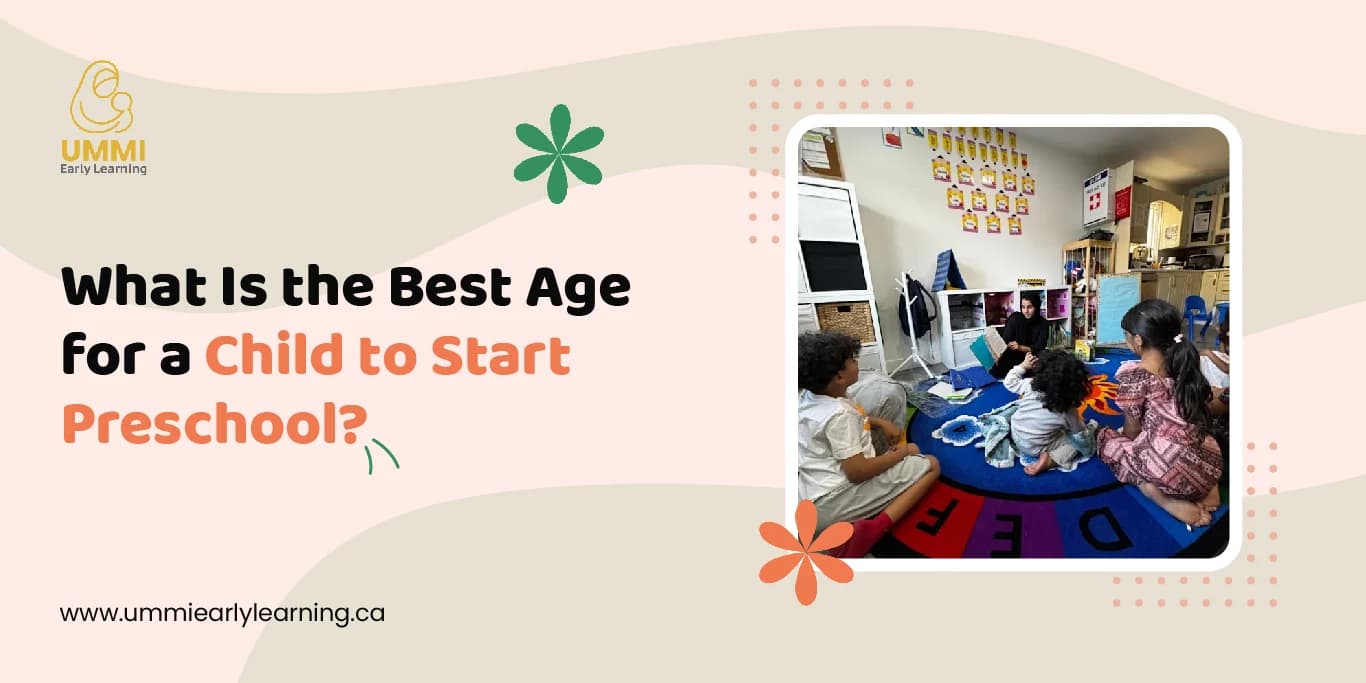
What Is the Best Age for a Child to Start Preschool?
Most children are ready to start preschool between and 3 years. By this age, most children have the language, basic self-care skills, and emotional capacity to cope with a structured group setting for a few hours each day. And when it comes to Islamic early childhood education, this is also often the age when children begin to have the emotional space to absorb gentle values-based learning.
That said, readiness is not a fixed milestone, but varies from child to child. Let’s check out the best time to enrol your kid in a Muslim preschool Surrey center.
What Is the Best Age for a Child to Start Preschool?
Age 2-2.5: Some children wish to have play-based environments, at least for some time. But at this age, separation anxiety is still normal.
Age 3: The Goldilocks age for most kids. Language is changing quickly, and social play becomes more purpose-driven.
Age 3.5-4: Children who wait adapt more quickly. They have more self-regulation in the classroom.
Why 3 Is the Most Common Recommended Age to Start Preschool?
Most child development experts recommend starting preschool at age 3 because that’s when children develop the basic social and cognitive skills to function in a group setting. At 3 years old, most children have these qualities:
Passed An Important Milestone in Language Development
Children usually have a working vocabulary of 200–1,000 words by age 3. This means they can:
Communicate needs
Ask questions
Follow directions
This stage can also be especially helpful for Islamic early childhood education, as children begin to absorb language more naturally. That’s why we at UMMI Early Learning Academy introduce some basic Arabic words through stories and songs at this stage.
Self-regulation Begins to Develop
Three-year-olds are beginning to control impulses and emotions in ways that younger toddlers are not able to do. They can:
Wait for their turn
Sit for short activities
Respond to redirection from a teacher.
Social Readiness Leaps
At this age, kids go from parallel play (playing next to others) to associative play (actually interacting). This makes group learning much more effective and meaningful for them.
Neural Connections Form Faster
Research confirms that brain plasticity at the ages between 2 and 4 is at an all-time high. Age 3 falls right into that window.
Brain Development Cycle of Kids
Between the ages of 2 and 4, a child’s brain makes more than a million new neural connections every second. This is the period of most intense cognitive growth in a human life-span. What happens in these years directly impacts how ready a child is to learn in an organized setting in any Islamic early childhood education program.
Have a look at the main stages of brain development:
Language Explosion (Ages 2-3)
Kids move from simple two-word phrases to full sentences. This is the optimal window to introduce bilingual or faith-based vocabulary in an Islamic early learning environment because the language centers of the brain are highly active.
Prefrontal Cortex Development (Ages 3-4)
This is the part of the brain that manages impulse control and attention. A child who can sit for five minutes and follow a two-step instruction is neurologically ready.
Emotional Regulation (Ages 4-5)
As children begin to recognize their own and others’ emotions, emotional regulation develops. This makes group learning environments a lot more effective.
So, in short, academic preparedness is all about whether the brain has matured sufficiently to cope with core skills such as self-regulation, language, and social interaction.
How To Know If Your Kid Is Prepared For A Full-time Daycare Vancouver Facility?
These are the basic signals that show that a child is ready for a Muslim preschool Richmond center:
Basic Communication
Can your child communicate simple needs, such as asking for water or telling you they need to go to the bathroom? It reduces frustration in group settings and allows teachers to respond quickly.
Tolerance of Short-term Separation
Can they be with a trusted adult (not a parent) without excessive distress? This is the basis of classroom adjustment.
Basic Instruction
Can they follow a two-step instruction, like “pick up the toy and put it on the shelf”? This skill directly affects their ability to participate in structured activities.
Curiosity and Play Engagement
Are they interested in books, puzzles, or other kids? Curiosity is the system that makes early learning stick.
Shows Interest in Other Kids
Do they watch, approach, or attempt to play with peers? If yes, the kid is prepared for the social activities of a full-time daycare Vancouver facility.
How to Pick the Right Islamic Early Childhood Education Program for Your Child’s Age and Needs?
Check the child-to-teacher ratio: For younger children (2–3 years), the ratios should be 1:4 or better. Higher ratios mean less individual attention, which is most important in the initial adjustment period.
Ask about the daily routine: Programs for toddlers need to have a balance of free play and a gentle routine. A schedule that is too rigid overwhelms young children. Too loose, and they won’t develop the skills of focus they will need later.
Values alignment: For families wanting Islamic Early Childhood Education, make sure the program includes faith-based learning on a daily basis, and not just on special events.
Consider part-time vs full-time care: Full-time daycare Vancouver is perfect if you have a job, but part-time options might be better for younger or more sensitive children who need to adjust to the daycare environment more slowly.
Go in person: See how staff interact with kids when they think no one is watching. That's a testament to the culture of the program.
Frequently Asked Questions (FAQs)
What is the best age to start a child in preschool?
Most kids are ready between 2 and 3 years of age. They can learn the language, self-care skills, and emotional capacity to benefit from a structured group setting.
Why is age 3 the commonly suggested time to start Islamic early childhood education?
At age 3, children have 200-1,000 words in their vocabulary, start to develop self-regulation, and gets comfortable with interactive play. This neurological and social leap makes group learning effective.
Is my 2-year-old too young to go to a Muslim preschool Surrey center?
No, not always. Some 2-2.5-year-olds thrive in part-time, play-based environments. However, separation anxiety is still normal at this age. A gentle part-time program may be a good fit if your child is inquisitive.
What to check during a preschool visit?
You can have a look at whether their daily schedules are age-appropriate, how teachers handle transitions, and if Islamic values are naturally integrated into the activities.
Conclusion
Readiness is not a one-and-done checkbox. It’s a cocktail of social ease, language growth, and emotional control that is unique to each child.
After all, the outcome is determined by the environment. It’s an easier transition and stickier learning when you have a values-aligned environment, one that supports what you teach at home.
That’s exactly where the relevance of Islamic early childhood education comes in.
At UMMI Early Learning Center, the principles of Islamic early learning are embedded in every aspect of the day. Schedule a visit now!