
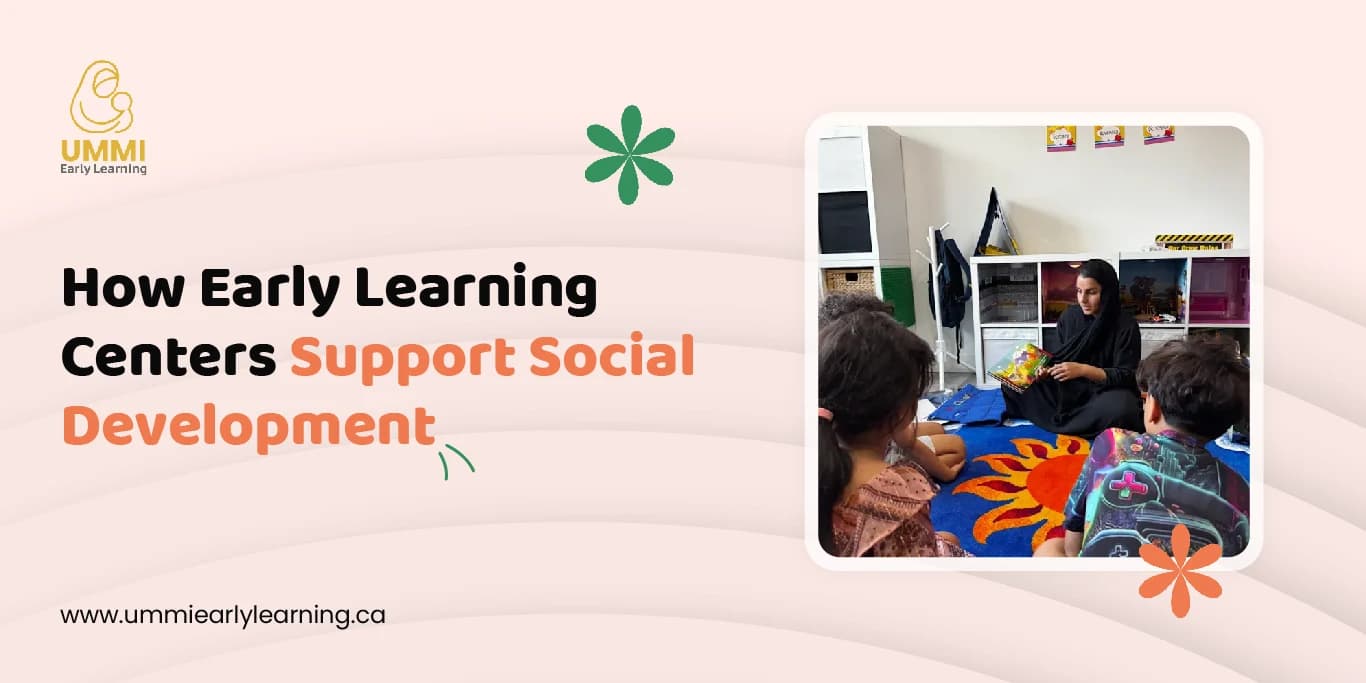
How Early Learning Centers Support Social Development
Children learn how to talk, work together, express their feelings, and make friends in the first few years of life. Early learning centers have a big impact on how these soft skills develop.
In a well-designed environment, kids are always given opportunities to learn to be patient, understanding, confident, and good at communicating. Check out how early childhood education BC centres lay down the foundation for lifelong success.
What is Social Development?
Social development is the process by which kids learn how to deal with other people and behave in group settings. These skills start to develop very early in life, well before kids start school.
Science Behind Early Social Growth
Brain development is very closely linked to social skills:
The prefrontal cortex is in charge of making decisions, controlling impulses, and social behavior.
The limbic system is responsible for processing emotions and emotional responses.
The mirror neuron system helps kids learn by watching other people.
These systems get stronger when kids interact with peers over and over. Good experiences boost confidence and emotional stability, and supportive guidance helps kids understand social cues. This is why structured early learning spaces are so important.
How Early Learning Centers Build Social Skills
Early learning centers are carefully planned places where kids can naturally practice social skills every day. Here’s how a daycare in Richmond BC can help in the social development of your child:
1. Peer Interaction
Regular interaction with other children teaches some of the most fundamental life skills. Kids will learn:
Turn-taking and patience
Cooperation and teamwork
How to respect individual boundaries
Gradually, they move beyond self-thinking and understand the perspective of others.
2. Communication and Language Development
Language development and social growth are very closely related. Kids use communication to ask questions, negotiate, express their needs, and make friends.
In early learning settings, children consistently engage in:
Verbal expression
Listening skills
Non-verbal communication
Vocabulary expansion
Teachers actively encourage kids to talk, tell stories, and lead discussions. That naturally increases their communication confidence.
3. Emotional Intelligence
Emotional intelligence is the ability to understand and deal with emotions. Children develop emotional intelligence by learning to:
Recognize emotions
Express emotions appropriately
Get a sense of how other people feel
Cope with frustration
Supportive teachers show kids how to stay calm, give them comfort, and help them deal with their feelings. Over time, kids learn to control their reactions rather than act on impulse.
4. Structured Environment
Kids feel safe when they have regular schedules. When children feel safe, they are more encouraged to explore, interact, and engage socially. They feel secure enough to take social risks, such as inviting a new friend to play.
Role of Islamic Early Learning in Social Development
Faith-aligned settings, especially Halal daycare BC centres, offer an extra layer of emotional solace and behavioral direction. For a lot of families, these places have important benefits:
Familiar cultural norms create emotional security
Shared values encourage respectful behavior
Ethical lessons make people more caring and understanding
Identity affirmation supports confidence
UMMI Early Learning Academy, one of the most trusted Vancouver Muslim daycare centers, offers a caring environment that helps kids grow socially and emotionally as well as academically.
Frequently Asked Questions (FAQs)
Why is social development important at an early age?
Social development is the basis for school preparation and lifelong mental health. It builds the neural pathways for empathy, conflict resolution, and self-confidence.
How do early learning centers help shy children?
Educators use scaffolded interactions. It’s a method of pairing shy children with empathetic peers. That lets children find their voice at their own pace.
What if my child only needs occasional care?
A drop-in daycare Vancouver is a fantastic way to give your child social exposure without a full-time commitment, keeping their social skills sharp.
Conclusion
Social skills shape how children build friendships, handle challenges, express emotions, and handle the world around them. Only the right early learning environment can set the stage for it.
At UMMI Early Learning Academy, we believe that strong social bonds are the foundation of a strong spirit. Visit us now to learn more about our community-focused programs!